

Welcome on the NitMetFun project website
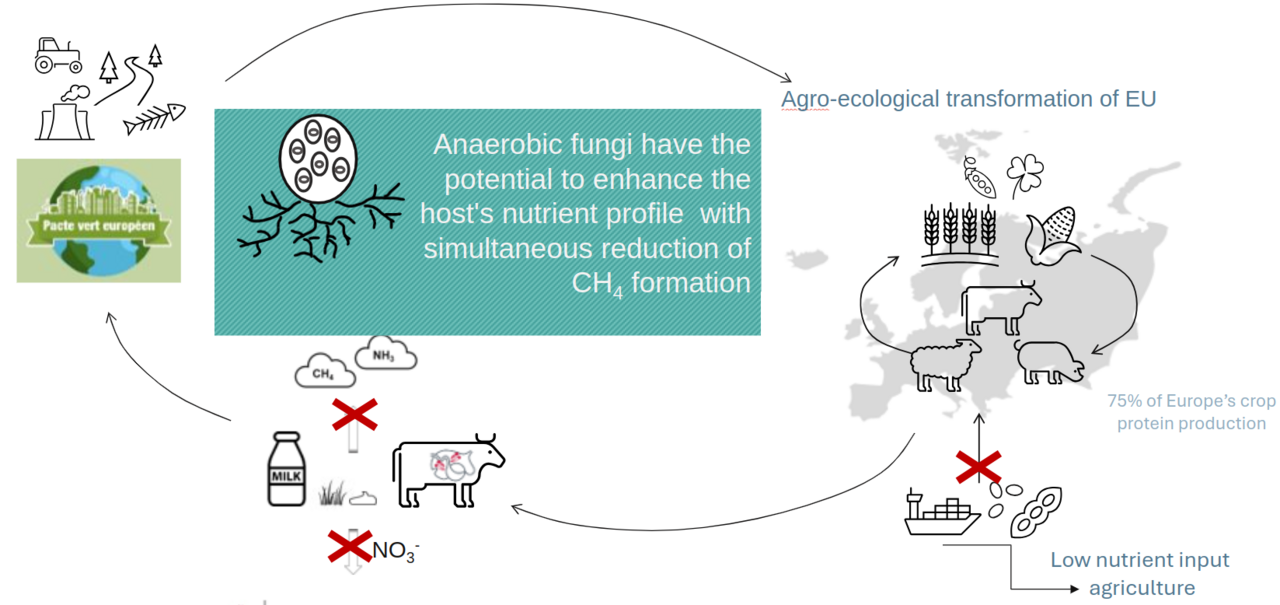
Food systems are responsible for a third of global anthropogenic greenhouse gas emissions, largely contributing to the climate change. Europe´s agro-food system trajectory is characterised by a low efficiency of protein (i.e. nitrogenous) feedstuffs utilization, and significant nitrogen losses to the environment (around 77% of the total nitrogen), causing soil, water and air pollution. Protein is not only the most expensive feed ingredient, and its losses reduce farmers profits, but high-grain diet also leads to rumen dysbiosis, lowering the animal performance. Rumen is the largest component of the ruminant gastrointestinal tract. Hosting a diverse microbiome composed of bacteria, archaea, protists and anaerobic fungi, rumen dynamics is almost solely responsible for nutrient provision to the host. Anaerobic fungi are the least well characterised rumen microbes, even though fungi represent around 20% of the microbial biomass and are considered hidden champions to the efficient cow nitrogen and carbon metabolisms.
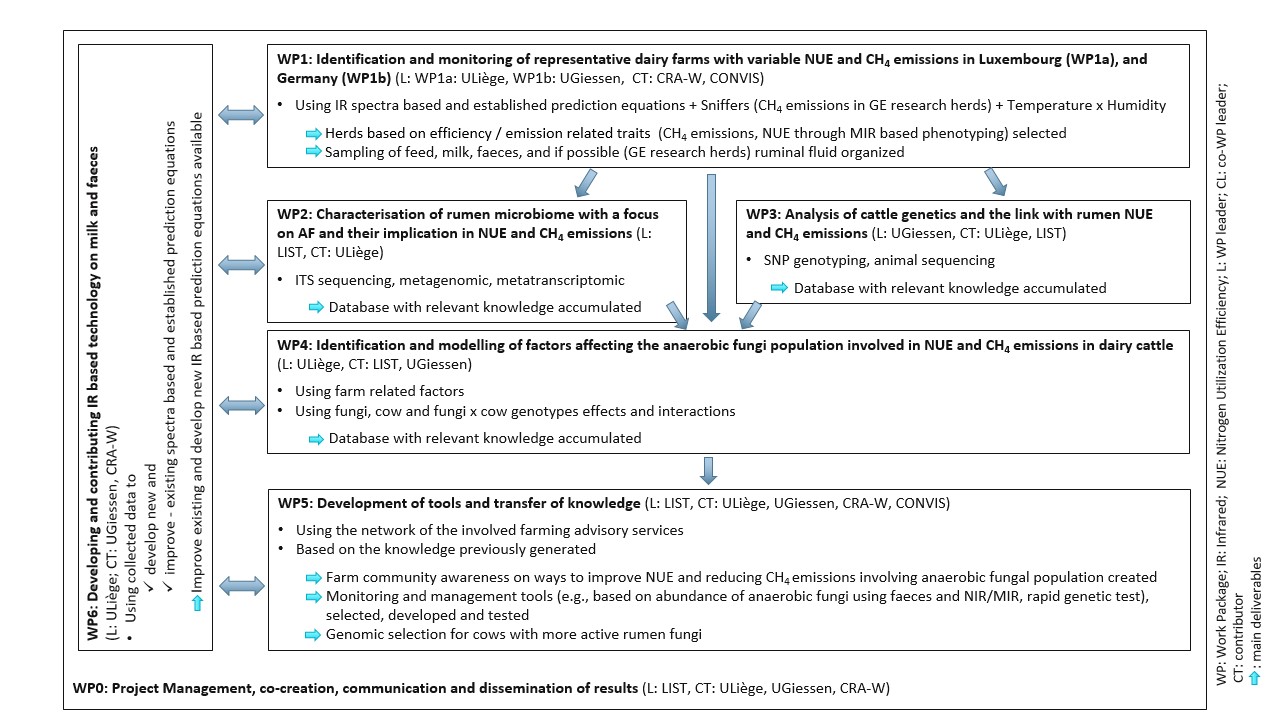
In NITMETFUN we propose to investigate how different farming practices, feedstuff type and especially cow genetics relate to the abundance and activity of anaerobic fungi in rumen. Our specific goal is to generate know-how on fungi contribution to improved nitrogen (i.e. protein) utilization efficiency and reduced methane emissions. We will do so by monitoring anaerobic fungi in rumen and faeces of dairy cattle, and by linking this information to the cow genetics, and estimates of nitrogen and carbon metabolisms inferred from the infrared spectra of milk and faeces. Beyond improved dietary management of dairy cattle, active selection for cows with best adapted rumen fungi should also lead to a drastic reduction of nutrient losses and decreased greenhouse gas emissions, a strategy that has been proposed as very efficient at local scale because of its cumulative and permanent nature.
NITMETFUN will transfer knowledge to the farming community in Luxembourg and beyond throughout North-Western Europe, specifically supporting the strong dairy sector in this region. We will develop rapid and non-invasive tools for the assessment of the rumen anaerobic fungi communities. This will be done directly through the molecular analysis of faeces for the presence of fungi. And indirectly, based on improved infrared equations applied to milk, respectively faeces, to predict feed nitrogen utilization efficiency and methane emissions in dairy cows.